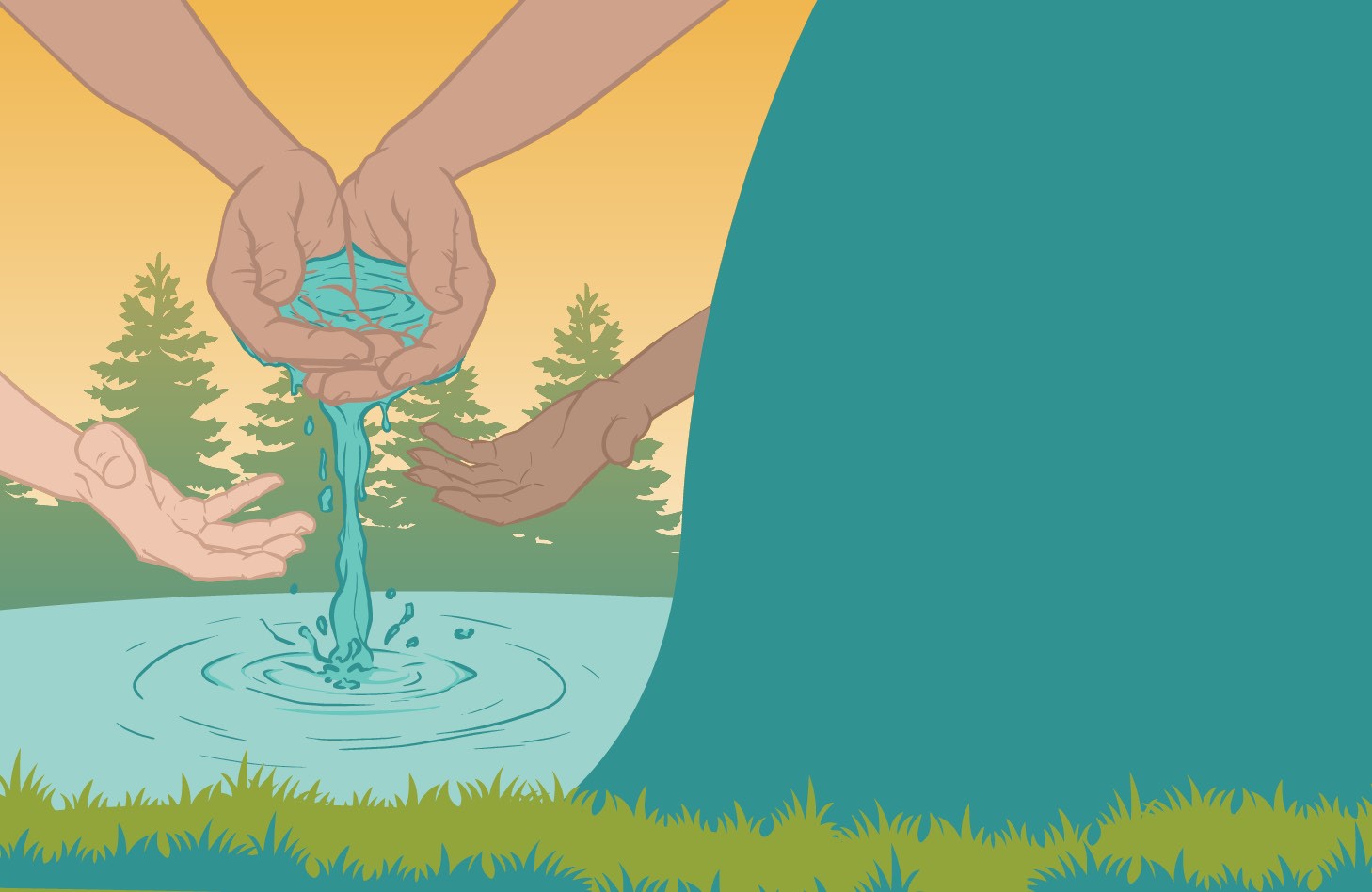
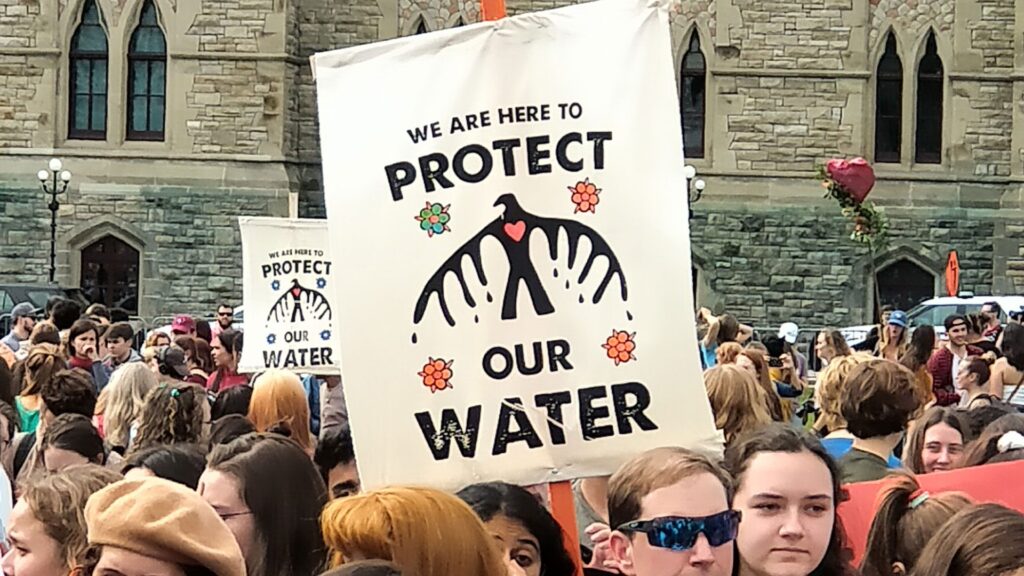
“Access to safe drinking water is a long-standing issue in many First Nations communities. We previously reported on this issue in 2005 and again in 2011 and provided recommendations to help resolve this issue. Fifteen years after we first examined the issue, some First Nations communities continue to experience a lack of access to safe drinking water.” (Government of Canada, Office of the Auditor General of Canada, 2021)
Aptn National News (2021)
My Wicked Problem
Throughout this term, I have explored access to clean, safe, or running water for indigenous communities across Canada. Boil water advisories or even do not use advisories are common across Canada, but the issue lies in that statistics. Indigenous communities are 2.5 times more likely to be affected by these advisories and 70% of indigenous communities have been affected by these advisories between 2004 and 2013 (Patrick, 2011). Though this issue seems very simple to solve, just give all communities access to water, it is not that simple. There has been many different government funded operations to help combat this issue with the biggest coming in 2016. The Canadian Government committed to eliminate all long-term water advisories in indigenous communities by March of 2021, and they committed $2 billion to help indigenous communities across the country gain access to the infrastructure they need. Though it was reported in 2020 that they had spent $1.79 billion to help combat this issue it is still persisting, but the government believe that building on indigenous communities infrastructure and giving them reliable access to clean drinking water is a key component towards reconciliation ( Government of Canada, Office of the Auditor General of Canada, 2021)
Background for this Project
What is a “Wicked Problem”
A wicked problem is a term that was quite new to me when this project started. I had thought that all problems had a definitive solution, and that it was a lack of care or urgency that caused these problems to not be resolved. Through this term, I have looked into certain problems, finding them to have no clear solution, there is always a change of requirements to solve these problems or the stakeholders involve have conflicting and contradicting views on the matter. While many of the actors involved in these problems are larger scale, There is also no scale that causes a certain conflict or problem to become “wicked”.
Why did I choose to focus on this topic?
This issue is one that I have been deeply interested in since I started my journey in the Geography and Environmental Studies program and Thompson Rivers University. I have witnessed firsthand how these water shortages can influence behaviours in these indigenous communities, and being an indigenous person myself, I feel for those involved in this problem. Though there is many different reconciliation efforts that could be seen as wicked problems, this is one that stands out to me as a violation of basic human rights and reads as a sort of systemic racism.
How does this issue correlate to my GES learning?
This problem would be considered a social issue, leaning towards a humanistic geography problem. Through out my time at Thompson Rivers University, many classes that I have taken have focussed on social issues. These issues such as colonialism and conflicts within cultures, which were covered in the GEOG 3200 Cultural Geography course that I took in the fall 2023 semester, helped to provide some background into these issues that indigenous people of Canada are facing today. I have also lucked out due to the fact that I am currently enrolled in GEOG 4850 Geography of First Nations Issues in BC, which also has provided a better understanding of indigenous issues and especially their laws and regulations, all while I have been exploring this topic of indigenous communities access to water. Though this is a heavily social topic, many of the articles that have been explored in this project have contained graphs, which I was able to fully comprehend due to my experiences in GEOG 2700 Geographical Analysis. This topic also focuses on water, which is a key piece of the natural world, and my understanding of GIS and how that is used in designing water systems and other infrastructure has played a pivotal role in my understanding of this issue.
Systems Map
Levers of Change
- Increased infrastructure support can lead to more job opportunities – An increase in support for new infrastructure can create more economic opportunities. Access to safe drinking water can also boost a community’s economic growth and help reduce poverty (Government of Canada, Office of the Auditor General of Canada, 2021). Some of these communities have failing infrastructure, but using the help of indigenous lead research, many people in these communities may benefit economically, boosting further infrastructure expansion (Arsenault et al., 2018)
- More Reconciliation Efforts can lead to some Access for Indigenous Communities- There are many advocacy groups pushing for more efforts from our governments to reconcile with indigenous people across Canada. Increased infrastructure is seen as a key point in reconciliation efforts, especially solving the issues of water shortages. These water shortages are effecting individual people in these communities greatly, some even being linked to suicide due to the poverty they live in (Ansloos & Cooper, 2023). These deaths should be a call for more reconciliation efforts from those who have the power to do so. The economic growth that comes from having increased infrastructure is enough that should make governments and other groups push to increase their relationships with these remote indigenous groups.
Impact Gaps
- Canadian Governments are still Responsible for the Water on these Reserves, but there has not been much Management Efforts from said Governments- The Governments across Canada have faced backlash regarding these water shortages. There is an instance regarding two water systems failing in Ontario in 2000, one in the town of Walkerton, Ontario, and the other on Pikangikum First Nations land. It was described as racist and a failure of the government to live up to their own responsibilities. Where in the town of Walkerton, seven people tragically succumbed to an E.coli infection, and the Ontario drinking water standards were put into place, but not on reserve land. The Pikangikum First Nations lands were not effected by this new standard, even though they have struggled in the past with infrastructure, and also had their water system fail around the same time as Walkerton (Chambers, 2017)
- Indigenous Services Canada has not made True of their Promises to help solve this issue- Indigenous Services Canada provides many resources to Indigenous communities. They provide funding and advice on how to design and operate their own water systems, support the monitoring of drinking water, and provide health advice during times of concern. Studies show that Indigenous Services Canada did not meet their commitment to providing clean drinking water to indigenous communities by their promised March 31st 2021, as there were delays in projects well before the COVID-19 pandemic, which further halted projects (Government of Canada, Office of the Auditor General of Canada, 2021).
Future Steps Towards a “Solution”
Indigenous communities across Canada have been denied access to water for decades now. It is not something that should be taken likely in the matter of human rights, and though there is now advocacy groups, communities are speaking up, and even the United Nations is now supporting this cause, it is still a long road to any type of “solution”. These wicked problems almost always cause one actor involved to be “defeated” if the problem is to resolve for the victims. Solving this problem will take years of planning, development, and training, not to mention how much money this will cost. Moving forward from where we are would be to make a promise to help indigenous communities gain access to knowledge on how to design, construct, and maintain a fully operational water system. The Canadian Government also needs to understand indigenous water knowledge in order to better understand their culture and to not ruin anything culturally significant to them (Arsenault et al., 2018).This is obviously still a very difficult task to complete and will take years for the water systems to be put into place regardless, but one thing that needs to be stopped is the avoidance at finding some kind of solution.
References
Advocating for first nations in Canada. Assembly of First Nations. (n.d.). https://afn.ca/
Ansloos, J., & Cooper, A. (2023). Is Suicide a Water Justice Issue? Investigating Long-Term Drinking Water Advisories and Suicide in First Nations in Canada. International Journal of Environmental Research and Public Health, 20(5). https://doi.org/10.3390/ijerph20054045
Arsenault, R., Diver, S., McGregor, D., Witham, A., & Bourassa, C. (2018). Shifting the Framework of Canadian Water Governance through Indigenous Research Methods: Acknowledging the Past with an Eye on the Future. WATER, 10(1), 49. https://doi.org/10.3390/w10010049
Belanger, Y., Head, G. W., Awosoga, O., & Urban Aboriginal Knowledge Network, issuing body. (2015). Assessing urban aboriginal housing and homelessness in Canada / Dr. Yale Belanger, Gabrielle Weasel Head, Olu Awosoga. Urban Aboriginal Knowledge Network. https://research.ebsco.com/linkprocessor/plink?id=913a097a-1b72-3dc6-847f-234c3c18fe20
Bermedo-Carrasco, S., Bharadwaj, L., & Waldner, C. L. (2018). Factors associated with drinking and being satisfied with tap water in Indigenous communities in Saskatchewan, Canada. International Journal of Circumpolar Health, 77(1), 1466605. https://doi.org/10.1080/22423982.2018.1466605
Chambers, L. (2017). Boil-Water Advisories and Federal (In)Action: The Politics of Potable Water in Pikangikum First Nation. Journal of Canadian Studies, 51(2), 289–310. https://research.ebsco.com/linkprocessor/plink?id=ed3d0068-ceb0-3102-9b31-31e85696c2a0
Curran, D. (2017). Leaks in the System: Environmental Flows, Aboriginal Rights, and the Modernization Imperative for Water Law in British Columbia. U.B.C. Law Review, 50(2), 233–292. https://research.ebsco.com/linkprocessor/plink?id=46e51542-18c2-3c39-83cd-7709439f6de1
Eger, S., Minnes, S., Vodden, K., Hudson, A., Parewick, K., & Walsh, D. (2021). COVID-19 and Drinking Water Security in Rural, Remote and Indigenous Communities: The Role of Collaboration among Diverse Actors in Responding to a Global Pandemic. Journal of Rural & Community Development, 16(4), 112–140. https://research.ebsco.com/linkprocessor/plink?id=fef8ad23-e559-3875-82e0-8c74bd3efd96
Government of Canada, D. of J. (2025, August 21). Implementing the united nations declaration on the rights of indigenous peoples act. Implementing the United Nations Declaration on the Rights of Indigenous People Act. https://www.justice.gc.ca/eng/declaration/index.html
Government of Canada, O. of the A. G. of Canada. (2021). Report 3-Access to Safe Drinking Water in First Nations Communities-Indigenous Services Canada. https://www.oag-bvg.gc.ca/internet/English/parl_oag_202102_03_e_43749.html
Hanrahan, M., Sarkar, A., & Hudson, A. (2014). Exploring Water Insecurity in a Northern Indigenous Community in Canada: The “Never-Ending Job” of the Southern Inuit of Black Tickle, Labrador. Arctic Anthropology, 51(2), 9–22.
Huynh, L., Anjum, S., Lieu, T., Horse, M. L., Martin-Hill, D., & Wekerle, C. (2024). Examining the connection between water concerns, water anxiety, and resilience among Indigenous persons: A systematic scoping review. Child Abuse & Neglect, 148. https://doi.org/10.1016/j.chiabu.2023.106184
Duncan, L. F., Bowden, M.-A., Alberta Law Foundation., Walter & Duncan Gordon Foundation., & Tomorrow Foundation for a Sustainable Future. (2009). A legal guide to aboriginal drinking water : a Prairie province perspective / Linda F. Duncan, Marie-Ann Bowden. Alberta Law Foundation.
Kehinde, M. O., Schuster-Wallace, C., Fowler, D., & Bharadwaj, L. A. (2025). Weaving knowledge systems to eradicate drinking water crises in First Nations across Canada. Journal of Water and Health, 23(9), 991–1003. https://doi.org/10.2166/wh.2025.346
Lyeo, J. S., Samim, Y., Decter, K., Agarwal, N., Liberda, E. N., Haines, S. R., & Spence, N. D. (2025). A scoping review of strengths-based drinking water policies in Indigenous communities in Canada, the United States, New Zealand, and Australia. ENVIRONMENTAL REVIEWS, 33, 0081. https://doi.org/10.1139/er-2024-0081
Marshall, R. E., Levison, J. K., McBean, E. A., Brown, E., & Harper, S. L. (2018). Source water protection programs and Indigenous communities in Canada and the United States: A scoping review. Journal of Hydrology, 562, 358–370. https://doi.org/10.1016/j.jhydrol.2018.04.070
Michael De Coste, Sana Saleem, Haroon R. Mian, Gyan Chhipi-Shrestha, Kasun Hewage, Madjid Mohseni, & Rehan Sadiq. (2024). Water security risks in small, remote, indigenous communities in Canada: A critical review on challenges and opportunities. Cambridge Prisms: Water, 2. https://doi.org/10.1017/wat.2024.3
Mitchell, F. M. (2018). “Water Is Life”: Using Photovoice to Document American Indian Perspectives on Water and Health. Social Work Research, 42(4), 277–289. https://doi.org/10.1093/swr/svy025
Morin, B. (2025). “We had all kinds of water.” Canadian Geographic, 145(1), 38–50. https://research.ebsco.com/linkprocessor/plink?id=abde97fc-01a3-397f-86a7-0a2633258ba8
News, A. N. (2021, September 17). Opinion: Water crisis solutions must involve traditional water law. APTN News. https://www.aptnnews.ca/national-news/opinion-water-crisis-solutions-must-involve-traditional-water-law/
Patrick R. J. (2011). Uneven access to safe drinking water for First Nations in Canada: connecting health and place through source water protection. Health & place, 17(1), 386–389. https://doi.org/10.1016/j.healthplace.2010.10.005
United Nations. (n.d.). United Nations declaration on the rights of indigenous peoples | division for inclusive social development (DISD). United Nations. https://social.desa.un.org/issues/indigenous-peoples/united-nations-declaration-on-the-rights-of-indigenous-peoples
Zambrano-Alvarado, J. I., & Uyaguari-Diaz, M. I. (2024). Insights into water insecurity in Indigenous communities in Canada: assessing microbial risks and innovative solutions, a multifaceted review. PeerJ, 12, e18277. https://doi.org/10.7717/peerj.18277