

Wicked Problem
The Great Pacific Garbage Patch (GPGP)
“Only we humans make waste that nature can’t digest.”
Captain Charles J Moore
Oceanographer
Discovered the Great Pacific Garbage Patch
National Oceanic and Atmospheric Administration
What is it?
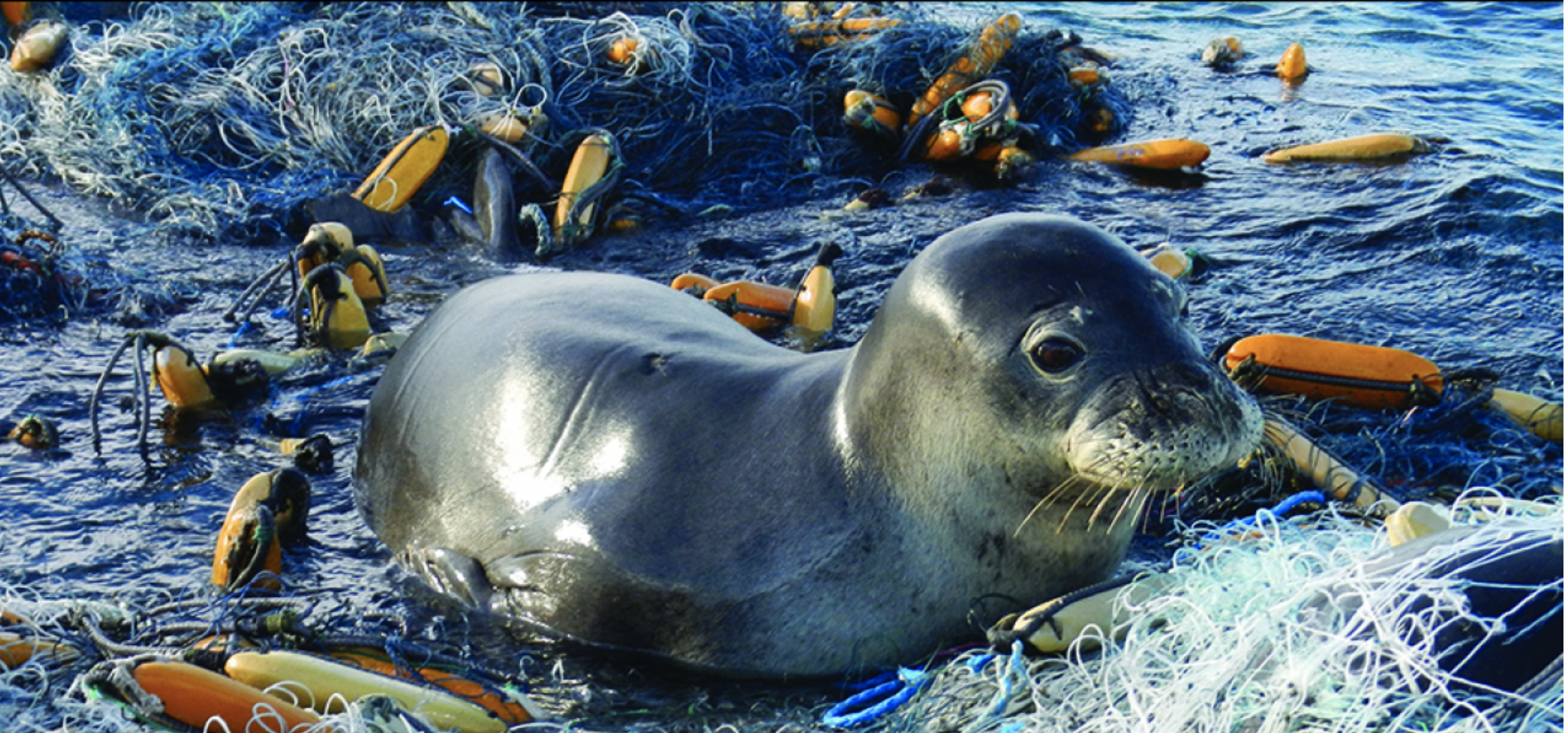
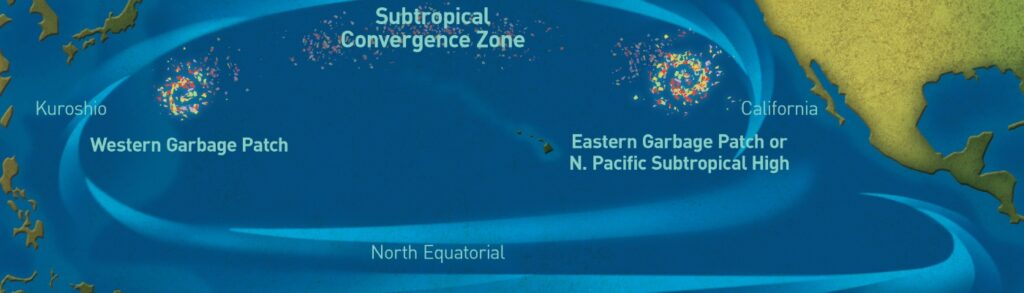
The Great Pacific Garbage Patch (GPGP) is located in the eastern part of the North Pacific Subtropical Gyre (Lebreton et al., 2018). It is the largest accumulation of plastic in the ocean and is sometimes referred to as the “Garbage Island.” It is an area containing approximately 100,000 tonnes of garbage, primarily plastics (The Ocean Cleanup, 2025c). It continues to accumulate and threatens the health of our Oceans, marine life, land animals, and human beings.
Why is it a Wicked Problem
A wicked problem is a problem that cannot be easily defined or solved. There are many phrases that outline the complexity of a wicked problem a few that directly apply the the GPGP being that there is no stopping rule, there is no immediate solution, it is is a symptom of other problems and the way one defines the problem determines how it can be solved (Rittel & Webber, 1973).
What scales are involved?
Every concept, stakeholder, and environmental element on this map directly impacts and/or is impacted by the GPGP. This map highlights some key stakeholders, but only covers the surface of the very complex wicked problem that is the Great Pacific Garbage Patch.
Next Steps..
Developing Lost Fishing Gear Reporting Policies
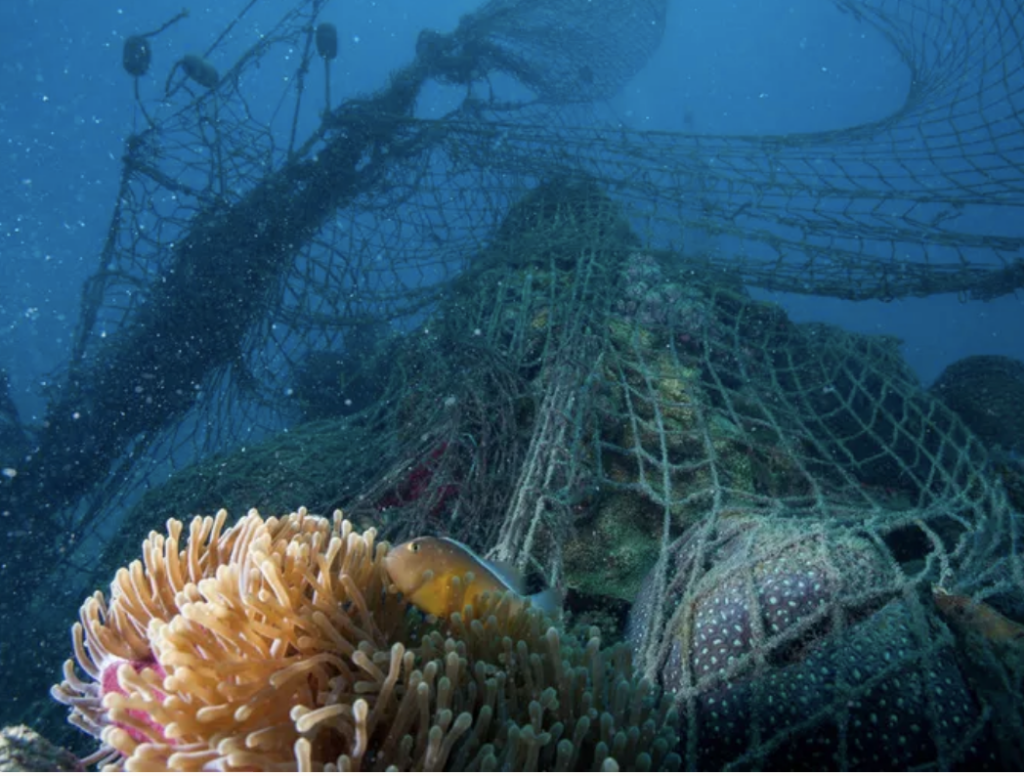
There are currently many waste reduction polices in place in countries that are major contributors to the GPGP (Asia, North America). But, these policies do not mandate or hold large fisheries responsible for the large amount of fishing gear that they abandon and or lose in the ocean. In order for large fisheries to be more conscious regarding their marine waste, and potentially reduce the amount that is abandoned, a mandatory reporting policy should be put in place.
Canada has a “Mandatory Lost Gear Reporting” policy (Fisheries and Oceans Canada, 2025). This policy could be reviewed as a framework for other countries to follow.
Improving Inefficient Policy Enforcement
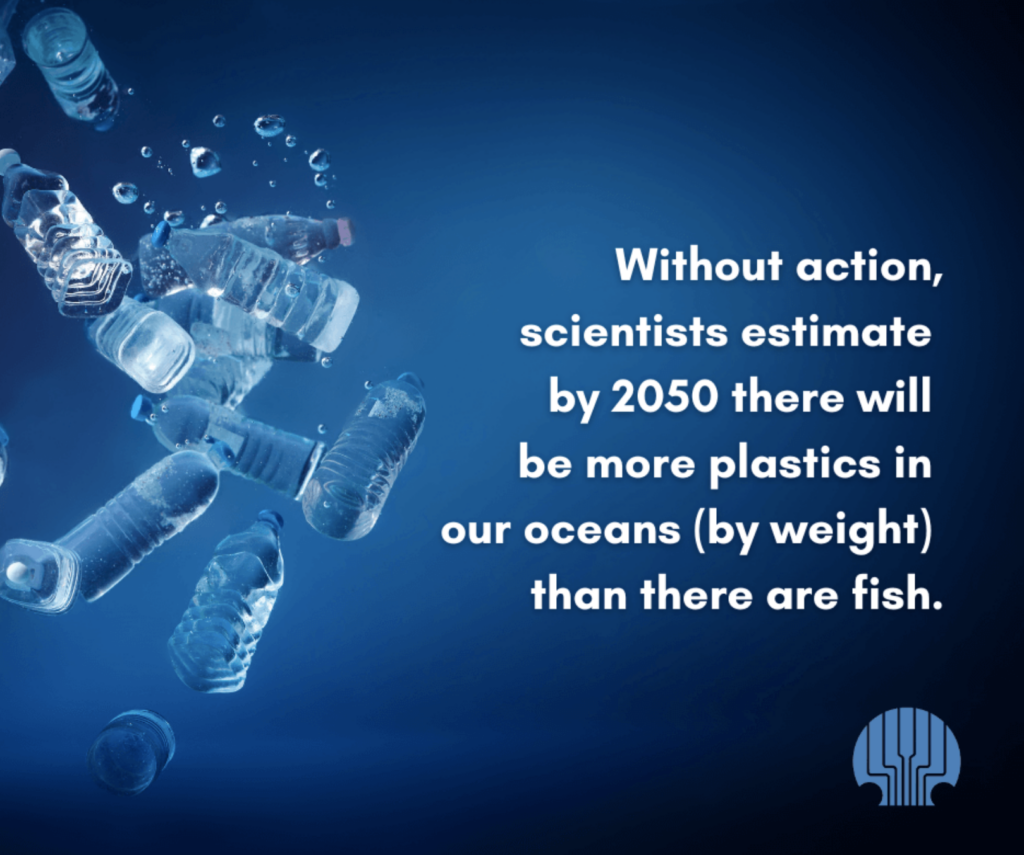
Policies in countries that are major contributors to the GPGP (Asia, North America) that focus upon the root of the problem, inflow of plastics from rivers and land, face major inefficiencies regarding the enforcement of said policies (Sawar et al., 2021)
Modifications to policies like The Bangkok Declaration on Combating Marine Debris in the ASEAN Region, The ASEAN Regional Action Plan for Combating Marine Debris, and the EU Single Use Plastics Directive could be made to center the policy’s focus around mandatory and accurate recording and reporting from large industries and manufacturers to monitor and mitigate their plastic pollution.
References
AirBoss of America. (2025). How does manufacturing support the local and global economy?. AirBoss of America Corporation. https://airboss.com/how-does-manufacturing-support-the-local-and-global-economy/
Anderson, K. (2025, February 18). Why overconsumption is a problem and how to stop it. Greenly. https://greenly.earth/en-gb/blog/ecology-news/why-overconsumption-is-a-problem-and-how-to-stop-it
Armstrong, H. (2015, January). Marine Pollution: A Look into the Great Pacific Garbage Patch. Shark Research & Conservation Program (SRC), University of Miami. https://sharkresearch.earth.miami.edu/marine-pollution-a-look-into-the-great-pacific-garbage-patch/
Bank of Canada. (n.d.). Inflation calculator. Bank of Canada. https://www.bankofcanada.ca/rates/related/inflation-calculator/
Bakari, S., & Tiba, S. (2022). Determinants of Economic Growth: The Case of The United States of America. Journal of Developing Economies. https://doi.org/10.20473/jde.v7i1.34414
ClientEarth. (2025). How does plastic affect the ocean? https://www.clientearth.org/latest/news/is-plastic-affecting-the-ocean-as-a-carbon-sink-we-ask-tatiana-lujan/
Delpeuch, C., Symes, W., & Innes, J. (2025, March). Government support to fisheries: Why should we care? International Institute for Sustainable Development. https://www.iisd.org/articles/policy-analysis/government-support-fisheries-resources
Dokl, M., Copot, A., Krajnc, D., Fan, Y. V., Vujanović, A., Aviso, K. B., Tan, R. R., Kravanja, Z., & Čuček, L. (2024). Global projections of plastic use, end-of-life fate and potential changes in consumption, reduction, recycling and replacement with bioplastics to 2050. Sustainable Production and Consumption, 51, 498–518. https://doi.org/10.1016/j.spc.2024.09.025
European Commission. (n.d.). Single-use plastics. https://environment.ec.europa.eu/topics/plastics/single-use-plastics_en
Fisheries and Oceans Canada. (2025). Data on lost and retrieved gear. https://www.dfo-mpo.gc.ca/fisheries-peches/management-gestion/ghostgear-equipementfantome/reporting-declaration-eng.html
Fleming, D., & McMahon, L. (2023, February 27). Ocean plastic: How tech is being used to clean up waste. BBC News. https://www.bbc.com/news/technology-64744926
Food and Agriculture Organization of the United Nations. (2024). Fisheries and aquaculture employment. OpenKnowledge. https://openknowledge.fao.org/server/api/core/bitstreams/1273bc36-339b-43d2-8163-af4d805f2ad2/content/sofia/2024/fisheries-aquaculture-employment.html
Garner, S. (2021). Ecoalf honors fishermen fighting against marine litter with short documentary. MR-Mag. https://mr-mag.com/ecoalf-honors-fishermen-fighting-against-marine-litter-with-short-documentary/
Global Footprint Network. (n.d.). How many Earths? How many countries? Earth Overshoot Day. https://overshoot.footprintnetwork.org/how-many-earths-or-countries-do-we-need/
Great Pacific Garbage Patch. (2025, April). National Geographic Society. https://education.nationalgeographic.org/resource/great-pacific-garbage-patch/
Hermawan, S., & Astuti, W. (2021). Analysing several ASEAN countries’ policy for combating marine plastic litter. Environmental Law Review, 23, 9 – 22. https://doi.org/10.1177/1461452921991731
Impacts of plastic pollution on tourism and fisheries. (2025). Polynext Awards & Conference 2025. https://polynextconf.com/impacts-of-plastic-pollution-on-tourism-fisheries/
International Maritime Organization. (2023, December 11). Strategic plan for the Organization for the six-year period 2024 to 2029 (Resolution A.1173(33)). https://wwwcdn.imo.org/localresources/en/About/strategy/Documents/A%2033-Res.1173.pdf.
Kazour, M., Terki, S., Rabhi, K., Jemaa, S., Khalaf, G., & Amara, R. (2019). Sources of microplastics pollution in the marine environment: Importance of wastewater treatment plant and coastal landfill. Marine Pollution Bulletin, 146, 608–618. https://doi.org/10.1016/j.marpolbul.2019.06.066
Kumar, R., Verma, A., Shome, A., Sinha, R., Sinha, S., Jha, P. K., Das, S., Sharma, P., & Vara Prasad, P. V. (2021). Impacts of plastic pollution on ecosystem services, sustainable development goals, and need to focus on circular economy and policy interventions. Sustainability, 13(17), 9963. https://doi.org/10.3390/su13179963
Lebreton, L., Slat, B., Ferrari, F., Sainte-Rose, B., Aitken, J., Marthouse, R., Hajbane, S., Cunsolo, S., Schwarz, A., Levivier, A., Noble, K., Debeljak, P., Maral, H., Schoeneich-Argent, R., Brambini, R., & Reisser, J. (2018). Evidence that the Great Pacific Garbage Patch is rapidly accumulating plastic. Scientific Reports, 8. https://doi.org/10.1038/s41598-018-22939-w
Macrotrends. (2025). World consumer spending: Historical chart & data. https://www.macrotrends.net/global-metrics/countries/wld/world/consumer-spending
Mah, A. (2021). Future-proofing capitalism: The paradox of the circular economy for plastics. Global Environmental Politics, 21(2), 1–22. https://doi.org/10.1162/glep_a_00594
Marine Debris Program. (2025). The economic impacts of marine debris on tourism-dependent communities. https://marinedebris.noaa.gov/research/economic-impacts-marine-debris-tourism-dependent-communities
Marine Stewardship Council. (2025). Preventing lost gear and ghost fishing. https://www.msc.org/what-we-are-doing/preventing-lost-gear-and-ghost-fishing
National Oceanic and Atmospheric Administration, Marine Debris Program. (2024, July). What and where are garbage patches? Discover Marine Debris. https://marinedebris.noaa.gov/discover-marine-debris/garbage-patches
Newman, R., & Noy, I. (2023). The global costs of extreme weather that are attributable to climate change. Nature Communications, 14. https://doi.org/10.2139/ssrn.4266618
Office of Response and Restoration National Oceanic and Atmospheric Administration. (2025). Supporting clean, healthy coasts and economies. https://response.restoration.noaa.gov/
Phelan, A., Meissner, K., Humphrey, J., & Ross, H. (2021). Plastic pollution and packaging: Corporate commitments and actions from the food and beverage sector. Journal of Cleaner Production. https://doi.org/10.1016/j.jclepro.2021.129827
Rittel, H.W.J., & Webber, M.M. (1973) Dilemmas in a general theory of planning. Policy Sci 4, 161–165. https://doi.org/10.1007/BF01405730
Sarwar, F., Ali, S., Bhatti, S., & Rehman, S. (2021). Legal approaches to reduce plastic marine pollution: Challenges and global governance. Annals of Social Sciences and Perspective, 2(1), 1–14. https://doi.org/10.52700/assap.v2i1.32
Shen, M., Ye, S., Zeng, G., Zhang, Y., Xing, L., Tang, W., Wen, X., & Liu, S. (2019). Can microplastics pose a threat to ocean carbon sequestration?. Marine pollution bulletin, 110712 . https://doi.org/10.1016/j.marpolbul.2019.110712
Sustainability Directory. (2024). Ocean Health Initiatives. Sustainability Directory. https://term.sustainability-directory.com/area/ocean-health-initiatives/
The Ocean Cleanup. (2022, September 1). Over 75% of plastic in Great Pacific Garbage Patch originates from fishing. https://theoceancleanup.com/press/press-releases/over-75-of-plastic-in-great-pacific-garbage-patch-originates-from-fishing/
The Ocean Cleanup. (2025a). Cleaning up the Garbage Patches. https://theoceancleanup.com/oceans/
The Ocean Cleanup. (2025b). New study highlights environmental harm of not cleaning GPGP [Press release]. https://theoceancleanup.com/press/press-releases/new-study-highlights-environmental-harm-of-not-cleaning-gpgp/
The Ocean Cleanup. (2025c). The Great Pacific Garbage Patch. https://theoceancleanup.com/great-pacific-garbage-patch/
The Ocean Cleanup. (2025d). The other source: Where does plastic in the Great Pacific Garbage Patch come from? https://theoceancleanup.com/updates/the-other-source-where-does-plastic-in-the-great-pacific-garbage-patch-come-from/
The Ocean Cleanup. (2025e). We Are The Ocean Cleanup. (2025, September). https://theoceancleanup.com/about/
Yuan, Z., Nag, R., & Cummins, E. (2022). Human health concerns regarding microplastics in the aquatic environment – From marine to food systems. The Science of the total environment, 153730 . https://doi.org/10.1016/j.scitotenv.2022.153730.
Yu, C. (2025, March 12). The rise of second-hand shopping and a low-consumption lifestyle. illumin. https://illumin.com/insights/blog/second-hand-shopping/
Yu, R., & Singh, S. (2023). Microplastic pollution: Threats and impacts on global marine ecosystems. Sustainability, 15(17), 13252. https://doi.org/10.3390/su151713252